Table Of Content
- How will a healthcare provider diagnose hair loss in women?
- Traction alopecia
- Get the Mayo Clinic app
- What’s the difference between acute telogen effluvium and chronic telogen effluvium?
- What causes you to lose your hair, what you can do about it and how to get it back
- What are the signs of hair loss in women?
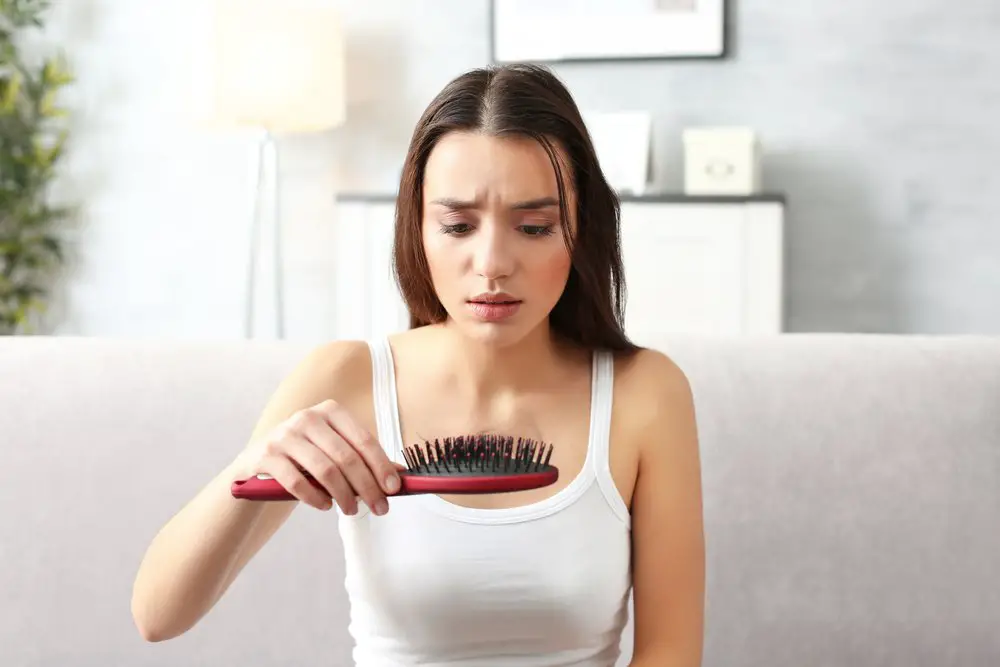
If you have wavy, coiled, or curly hair, you might not notice it looks thinner. You may, however, tend to see more significant hair shedding when you’re styling your hair. Usually, you can expect to have your typical head of hair back in about 1 year after the telogen effluvium starts. Your clinician might prescribe anti-inflammatory medications, like corticosteroids, if hair loss seems related to an autoimmune condition. There’s a range of treatment options for hair loss, but the best option for you will depend on what’s causing your hair loss. It’s also the most common cause of hair loss, affecting up to 50% of people.
How will a healthcare provider diagnose hair loss in women?
However, you have to follow directions exactly and use the product indefinitely. Don’t use this product if you’re pregnant, if you plan to get pregnant or if you’re breastfeeding (chestfeeding). Your shorter hairs — like eyelashes, arm and leg hair, and eyebrows —have a short anagen phase (about one month). Stress is any type of change that causes physical, emotional or psychological strain, according to the World Health Organization.
Traction alopecia
It goes without saying that excessive heat and chemical treatments aren’t a good idea, but try and opt for protective hairstyles too. “Opt for hairstyles that minimize tension on the hair follicles, such as loose braids, buns or ponytails,” advises Gaboardi. “Avoid tight hairstyles and hair accessories that pull on the hair and handle your hair with care to minimise breakage and damage.
Get the Mayo Clinic app
By eating a healthful, well-balanced diet, you can promote hair growth and prevent future loss. Alopecia areata (AA) is an autoimmune disorder where your immune system basically wages war on your hair follicles. The follicles may start to shrink, causing hair growth to slow down — or even stop altogether. ‘Traction alopecia is hair loss caused by repeated pulling or tension on the hair follicles. Tight hairstyles like braids, weaves, or ponytails are common culprits.
What’s the difference between acute telogen effluvium and chronic telogen effluvium?
There is also Polycystic Ovarian Syndrome (PCOS) for women to consider. Roughly 5 million women in America suffer from PCOS which is a hormonal imbalance in which the ovaries produce too much testosterone. High levels of testosterone in the female body cause many women to see thinning of hair on the scalp.
Symptoms include thinning hair, usually around the top of your head. Treatment exists to reverse hair loss, but hair will typically grow back in three to six months without treatment. Traction alopecia is the result of environmental factors, such as wearing your hair in tight hairstyles, Agbai says. Telogen effluvium refers to the excessive shedding of hair follicles, and it occurs when hair follicles prematurely skip to the end of the hair growth cycle, she adds. Telogen effluvium is characterized by the abrupt onset of hair loss - but, there’s a catch. The hair loss usually doesn’t begin until about three months after the inciting event.
When to see a doctor
Your body works by taking the nutrients you feed it and dispersing them throughout the body. However, the moment you develop an illness, your body focuses on feeding the parts of the body that are vital to staying alive. Hair loss is devastating for most people, especially when you do not know the reason behind it. While chronic stress can be a reason behind excessive hair loss, temporary stress is usually not the main cause.
Treatment for female pattern baldness
It develops when your immune system attacks your hair follicles. This may be triggered by stress, and it can result in hair loss. If you notice sudden or patchy hair loss or more than usual hair loss when combing or washing your hair, talk to your doctor. If needed, your doctor might also suggest treatment options for your hair loss. Healthy hair cycles start with the growth phase, then rest, before eventually falling out. This process repeats itself unless something interrupts it, such as hypothyroidism.

It’s possible to reverse many types of stress-related hair loss over time, Proudman said. However, it’s important to seek guidance from a doctor because some more serious medical conditions can cause hair loss as well. When stress causes a disruption to this cycle, more hairs move into the telogen phase, causing an increase in hair shedding and overall thinning, Proudman said. Sometimes, due to a shock to the system, the hair’s growth phase stalls out.
Without medications or treatment, hair loss due to androgenic alopecia is permanent. There are approximately 100,000 hair follicles on the adult scalp (although, this number may vary based on hair color). Each hair follicle is constantly cycling between growth and rest.
Telogen effluvium is when large numbers of hair follicles are pushed into the resting phase. As a result, people with this type of hair loss experience more hair falling out during brushing or washing, and the hair becomes noticeably thinner. Prolonged or intense stress can also cause the immune system to overreact, contributing to hair loss, Proudman told Live Science. According to a 2020 review in the Central European Journal of Immunology, alopecia areata is a type of hair loss where a person’s immune system attacks the hair follicles. Environmental factors, such as stress, may trigger this reaction, the review authors suggested.
Activation of mitochondrial aldehyde dehydrogenase 2 promotes hair growth in human hair follicles - ScienceDirect.com
Activation of mitochondrial aldehyde dehydrogenase 2 promotes hair growth in human hair follicles.
Posted: Tue, 14 Nov 2023 08:00:00 GMT [source]
Telogen effluvium is the excessive hair shedding of resting (telogen) hair. In a typical person’s scalp, 85% of hair is anagen, while 15% is telogen. Some stressors induce 70% of anagen hair into telogen, leading to hair loss. See your doctor if you are distressed by persistent hair loss in you or your child and want to pursue treatment.
Michelle Crouch is a contributing writer who has covered health and personal finance for some of the nation’s top consumer publications. Her work has appeared in Reader’s Digest, Real Simple, Prevention, The Washington Post and The New York Times. Hair loss, or alopecia, affects more than 80 percent of men and 50 percent of women, and the risk increases with age.
In degeneration (catagen), hair ceases to grow, and the follicle at the base of the strand shrinks. In rest (telogen), hair falls out and the process can begin again. Hair is among the few tissues that mammals can regenerate throughout their lifetime.
Scientists have been investigating the negative effects of stress on physical and emotional health for years. While many myths about stress have been debunked, we have also gained valuable new information about how stress actually affects society. Yet there are still many questions that people have about stress and the role it plays in our daily lives. Stress-related hair loss is often linked to certain conditions. A review study published in 2022 found that it significantly increases hair diameter and hair count in patients with several types of alopecia.
Everything from genetics to styling habits can play a role, and more than one factor is often to blame. That makes figuring out the root cause tricky, and once you understand what's causing your hair loss, treatment usually requires a multi-prong approach. The cause of your TE will affect whether your hair grows back in a few short months, or longer.


No comments:
Post a Comment