Table Of Content
The good news is that once stress is eliminated, usually your hair will return to its original rhythm and go back to a healthy growth process. Eventually, the hair that you lost during the stressful event will return. Keep in mind that it can take a very long time to recover the hair you lost. There are several treatment options available for overcoming stress hair loss. Eating a healthy diet, taking care of your hair, using topical medications, and — most importantly — finding ways to manage your stress can all help keep your tresses in check. There are many different topical options available to treat hair loss.
What can I expect if I have telogen effluvium?
Correcting the underlying problem is often all that’s needed to help stop hair loss. If you lose significant hair, it’s important to protect your scalp. Wear a hat, scarf or other head covering when you’re in the sun, and apply sunscreen daily. Treatment for stress-related hair loss depends on the type of hair loss a person experiences.
Understanding the hair growth cycle
By Elizabeth Scott, PhDElizabeth Scott, PhD is an author, workshop leader, educator, and award-winning blogger on stress management, positive psychology, relationships, and emotional wellbeing. You want to make habits that aren’t just highly effective for managing stress as you’re going through it but also for building resilience to cope with future stress. The key is to make these practices a regular part of your life and do them even when you’re not feeling overwhelmed. These initial findings in mice need to be further studied before they can be safely applied to humans. You'll soon start receiving the latest Mayo Clinic health information you requested in your inbox.
Diagnosis and Tests
Men can experience this at any time after hitting puberty, but for women, it's after menopause. However, sometimes hair loss has nothing to do with genetics and is the result of stress. Stress plays a huge roll in hair growth, and there are a few different types you can suffer from. 'Menopause-related hair loss in women, often due to hormonal changes, manifests as thinning or shedding.
12 Dietitian-Approved Foods That Promote Hair Growth - Health.com
12 Dietitian-Approved Foods That Promote Hair Growth.
Posted: Tue, 12 Sep 2023 07:00:00 GMT [source]
Will stress-related hair loss grow back?
For women who are experiencing a receding hairline (frontal fibrosing alopecia), talk with your doctor about early treatment to avoid significant permanent baldness. As mentioned, the inciting trauma or stress can be either physical, emotional, or both. But we're not necessarily talking about day-to-day, chronic types of stress. Rather, it's most often a singular, stressful event that's the culprit. Common examples include illness, surgery, break-ups, deaths, and even childbirth, points out Bhanusali. After the three- to six-month shedding period, you’ll notice new hair growth in your affected areas.
How Stress Can Affect Hair Loss And What To Do About It
Unless you have extremely oily hair, consider washing your hair only every other day or less. Hair transplant surgery involves moving small plugs of skin, each with a few hairs, to bald parts of your scalp. This article is written by Dr. Daniel K. Hall-Flavin and Mayo Clinic Staff. More health and medical information can be found on mayoclinic.org. Stress can cause hair loss, and there are a couple of different reasons it happens.
What does normal hair growth look like?
The most significant cause of hair loss in women is female-pattern hair loss (FPHL). In alopecia areata, the immune system attacks the hair follicles, causing patches to appear on the scalp, Proudman said. “The patches are usually the shape and size of a coin, although they can be larger,” she said.
Stress is just one of the reasons you could be experiencing hair loss. Dozens of over-the-counter supplements and products purport to reverse hair loss, making it tough for patients to know which ones work and which don’t. Generally speaking, the sooner you start treatment, the more options you have and the better your results, dermatologists say. Minoxidil may irritate your scalp and cause dryness, scaling, itching and/or redness. In addition, a healthcare provider might recommend forms of light therapy like using the HairMax Lasercomb®. Another FDA-approved laser product is the Theradome LH80 PRO® helmet and low-light laser helmets and caps.
Risk factors
Thinning caused by telogen effluvium may be treated with a medication called minoxidil (Regaine) – this is a topical treatment applied directly to the scalp. Stress symptoms are linked to the body’s “fight, flight or freeze” response. This is a survival response to stressful or potentially dangerous situations. Our body releases stress hormones such as cortisol which help us through this particular situation. Though we tend to think of stress as a psychological issue, it can affect your body. If you’ve ever experienced a period of significant stress you’ll know it can cause a long list of symptoms, including problems sleeping, headaches, and heartburn.
Alopecia areata involves the body’s immune system attacking the hair follicles in the anagen phase, which forces them to the catagen phase. Because the stem cells in the follicles are not destroyed, the hair follicles continue to regenerate and continue cycling. Baldness typically refers to excessive hair loss from your scalp. Hereditary hair loss with age is the most common cause of baldness. Some people prefer to let their hair loss run its course untreated and unhidden. Others may cover it up with hairstyles, makeup, hats or scarves.
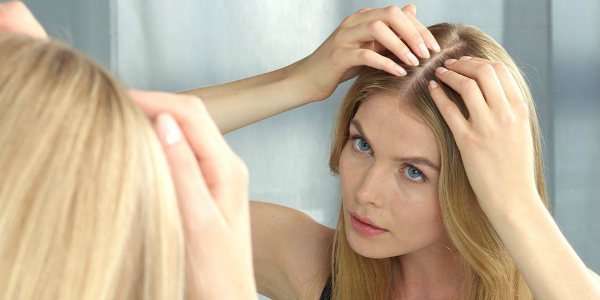
Female-pattern baldness typically starts with scalp hairs becoming progressively less dense. Many women first experience hair thinning and hair loss where they part their hair and on the top-central portion of the head. “We first asked whether the stress hormone was regulating the stem cells directly and checked by taking out the receptor for corticosterone, but this turned out to be wrong. Instead, we found that the stress hormone actually acts on a cluster of dermal cells underneath the hair follicle, known as the dermal papilla,” said Sekyu Choi, the lead author of the study. Subjecting mice to mild stress over many weeks increased corticosterone levels and reduced hair growth. Together, these findings supported the role of corticosterone in inhibiting hair regrowth.
Reducing the amount of stress we experience can benefit more than just our luscious locks. Finding ways to manage our stress can positively affect all aspects of our overall physical and mental well-being, including our weight, skin health, and anxiety levels. Hair-pulling disorder affects around 0.5 to 2 percent of people and can lead to permanent hair loss and thinning if left untreated. We’ve got all the deets on how stress affects your luscious locks and what you can do to treat or prevent stress-related hair loss. The condition can be caused by many different things; from lifestyle changes, iron deficiency, or even illness. If you have alopecia, you can help hold onto your tresses by avoiding behaviors that are known to contribute to temporary and permanent hair loss, Mirmirani says.
Stress-related hair loss is often temporary, so it's unlikely your hair will be lost forever. But it's still important to speak to a doctor about it, especially if it's bothering you. Many people think that hair loss only affects people assigned male at birth (AMAB). However, studies show that more than 50% of people assigned female at birth will experience noticeable hair loss.
Stress and hair loss can also be related, particularly if a person experiences high stress levels, according to the Mayo Clinic. In these cases, a person may notice that more hair is falling out or that fewer hairs are growing back. Both men and women can be affected, according to the Mayo Clinic.
Many times patients develop anxiety or stress due to hair loss itself, or the hair loss may be caused by another underlying issue or merely age. At older ages, our hair growth rates will slow down considerably. This means that periods of stress later on in life will be much harder to recover from when it comes to growing back your hair.


No comments:
Post a Comment